Noticing handfuls of hair in the shower or more strands on a pillow can be upsetting, especially while adjusting to life with a new baby. In many cases, postpartum shedding is a temporary change called telogen effluvium. The right postpartum hair loss treatment is often a combination of reassurance, gentle care, good nutrition, and time rather than an aggressive procedure.
However, not every type of hair loss after pregnancy has the same cause. Persistent thinning, bald patches, scalp symptoms, or other health changes deserve a professional assessment. A clinician can distinguish expected postpartum shedding from iron deficiency, thyroid disease, female pattern hair loss, alopecia areata, traction, scalp inflammation, and other conditions that may need specific care.
Why Does Postpartum Hair Loss Happen?
Hair follicles move through growth, transition, rest, and shedding phases. During pregnancy, higher estrogen levels can keep more hairs in the growth phase. After delivery, hormone levels change and many of those hairs enter the shedding phase within a similar period. This produces diffuse shedding across the scalp rather than the permanent loss of every affected follicle.
The American Academy of Dermatology describes postpartum shedding as telogen effluvium and notes that it often peaks around four months after delivery. Many women regain normal fullness earlier, while most see improvement by their child’s first birthday. Maxim’s general guide to postpartum hair loss also explains common signs and the usual recovery pattern.
What Are the Main Postpartum Hair Loss Treatment Options?
1. Watchful Waiting and Reassurance
For typical postpartum telogen effluvium, time is often the main treatment. The follicles are usually still capable of producing new hair, but the growth cycle takes months to normalize. The Health Service Executive in Ireland advises that postpartum telogen effluvium generally resolves without treatment, while the AAD notes that many women regain normal fullness by the baby’s first birthday.
Watchful waiting does not mean ignoring your health. It means monitoring the pattern and timeline while using gentle care, maintaining nutrition, and seeking assessment if the course is atypical.
2. Gentle Hair and Scalp Care
Hair that is shedding can feel thinner and may break more easily. Practical care cannot stop hormone-related shedding overnight, but it can reduce avoidable damage:
- Use a gentle shampoo and conditioner suited to your scalp and hair texture.
- Detangle carefully with a wide-tooth comb, beginning at the ends.
- Limit tight ponytails, braids, extensions, or styles that pull on the hairline.
- Reduce high heat, harsh chemical processing, and vigorous brushing.
- Use lightweight volumizing products if they make the hair easier to style.
- Choose a haircut or parting that improves the appearance of fullness without tension.
AAD guidance recommends volumizing shampoo, lighter conditioner applied mainly to the ends, and hairstyles that create the appearance of fullness. These are cosmetic measures, but they can make the recovery period easier to manage.
3. Balanced Nutrition and Appropriate Testing
Recovery after pregnancy increases nutritional demands, particularly for mothers who are breastfeeding. Aim for regular meals with adequate protein, iron-containing foods, fruits, vegetables, whole grains, and fluids. If appetite, access to food, or dietary restrictions make this difficult, ask a qualified clinician or dietitian for advice.
Do not assume that every case requires high-dose biotin, iron, zinc, or other hair supplements. AAD guidance recommends supplements such as iron or zinc only when testing shows a deficiency, because excessive intake can be harmful. A doctor may consider blood tests when symptoms, history, or examination suggest anemia, low iron stores, thyroid dysfunction, or another contributing condition.
Tell the clinician about heavy bleeding during delivery, fatigue, palpitations, weight changes, feeling unusually hot or cold, dietary restrictions, and any postpartum complications. These details help determine whether testing is appropriate.
4. Diagnosis-Specific Medical Treatment
Medication is not automatically needed for temporary postpartum shedding. If an examination identifies another cause, treatment should target that diagnosis. Examples may include correcting a confirmed nutrient deficiency, managing thyroid disease, treating scalp inflammation or infection, or addressing coexisting female pattern hair loss.
Women who are breastfeeding should not start over-the-counter or prescription hair-loss medication without medical advice. The AAD advises that women who are pregnant, planning pregnancy, or breastfeeding should avoid minoxidil. Other hair-loss medicines can also be unsuitable during pregnancy or lactation. Your obstetrician, pediatrician, primary-care doctor, or dermatologist can help weigh maternal benefit, infant exposure, and available alternatives.
5. Cosmetic Support During Regrowth
Some mothers prefer a shorter cut, a different part, hair fibers, a scarf, or a hairpiece while density recovers. These options do not treat the underlying shedding, but they can provide immediate visual support. Avoid adhesives, clips, or styling methods that create tension on fragile areas.
When Is a Professional Hair Assessment Helpful?
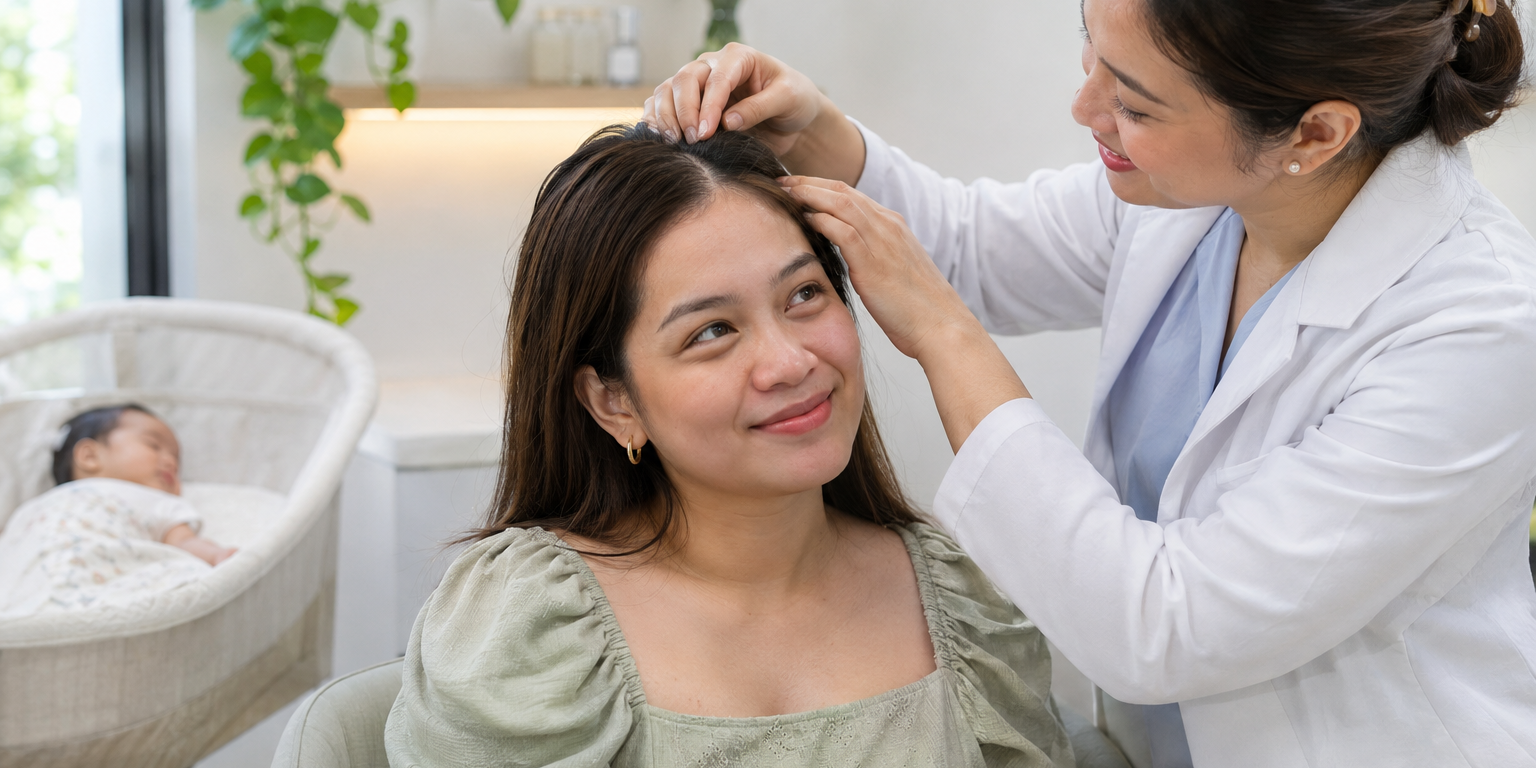
A clinician will ask about the timing and pattern of shedding, pregnancy and delivery, menstrual changes, illnesses, stress, nutrition, medicines, supplements, family history, and scalp symptoms. Examination may include the scalp, hair shafts, hairline, part width, and signs of regrowth. Blood testing or other evaluation is used selectively rather than automatically.
Maxim’s overview of common causes of hair loss in women includes hormonal changes after pregnancy among several possible explanations. Because causes can overlap, a postpartum trigger does not rule out an additional condition such as female pattern hair loss.
What About PRP, Laser Devices, or Other Procedures?
Clinic-based or device treatments are sometimes marketed to new mothers, but they are not a routine requirement for temporary postpartum telogen effluvium. Evidence, suitability, cost, breastfeeding considerations, and the actual diagnosis should be reviewed before treatment. A procedure should not be offered simply because shedding feels dramatic.
If shedding persists or another diagnosis is confirmed, a clinician may discuss non-surgical or surgical options appropriate to that condition. Maxim’s female hair restoration services cover several types of female hair-loss concerns, but a consultation is needed to determine whether any offered option is relevant. No device or procedure should be presented as guaranteed to restore postpartum density.
Is Hair Transplant Surgery a Postpartum Hair Loss Treatment?
Hair transplant surgery is generally not an appropriate treatment for active, temporary postpartum shedding. Telogen effluvium usually affects hairs diffusely and can improve as the cycle normalizes. Operating before the cause and stability of hair loss are understood can expose a patient to unnecessary surgery and make planning unreliable.
A transplant may be discussed only when a separate, persistent form of hair loss has been accurately diagnosed, the pattern has stabilized, medical considerations have been addressed, and the patient has an appropriate donor supply. Timing must also account for breastfeeding, recovery from pregnancy, future pregnancy plans, and the demands of caring for a baby. The decision should be individualized and never rushed.
When Should You See a Doctor Sooner?
Arrange a medical assessment if you notice:
- Round, smooth, or clearly defined bald patches
- Scalp pain, burning, marked itching, redness, scaling, sores, or pus
- Loss of eyebrows or eyelashes along with scalp hair
- Rapid shedding that began before delivery or has no clear postpartum timeline
- Heavy or irregular bleeding, severe fatigue, dizziness, palpitations, or other symptoms of anemia
- Unexplained weight change, heat or cold intolerance, tremor, or other possible thyroid symptoms
- Progressive widening of the part or patterned thinning rather than gradual recovery
- No meaningful return toward normal fullness by about one year postpartum
Seek urgent care for symptoms that may represent a serious postpartum medical problem, such as chest pain, difficulty breathing, fainting, severe headache, heavy bleeding, or thoughts of harming yourself or your baby. Those concerns require immediate medical care rather than a hair clinic appointment.
Questions to Ask Before Starting Treatment
- Does my pattern look like temporary telogen effluvium or another diagnosis?
- Is the timeline typical for the number of months since delivery?
- Do my symptoms or history suggest iron, thyroid, or other testing?
- Could any medicine, supplement, hairstyle, or scalp condition be contributing?
- Is this option compatible with breastfeeding or a future pregnancy?
- What improvement should happen without treatment, and how long should I monitor it?
- What evidence supports the recommended treatment for my diagnosis?
- When should I return if shedding does not improve?
A Calm, Diagnosis-First Approach
Postpartum hair fall can look severe because many hairs shed within the same period, but typical telogen effluvium is temporary. Supportive care, nutrition, patience, and follow-up are often more appropriate than aggressive treatment. When the pattern is unusual or recovery is delayed, accurate diagnosis should come before supplements, medication, procedures, or surgery.
If you would like an individualized hair and scalp assessment in the Philippines, review Maxim’s hair restoration doctor information and request a consultation with Maxim Philippines. Tell the team if you are postpartum, breastfeeding, pregnant, or planning pregnancy so that any discussion remains medically appropriate.