
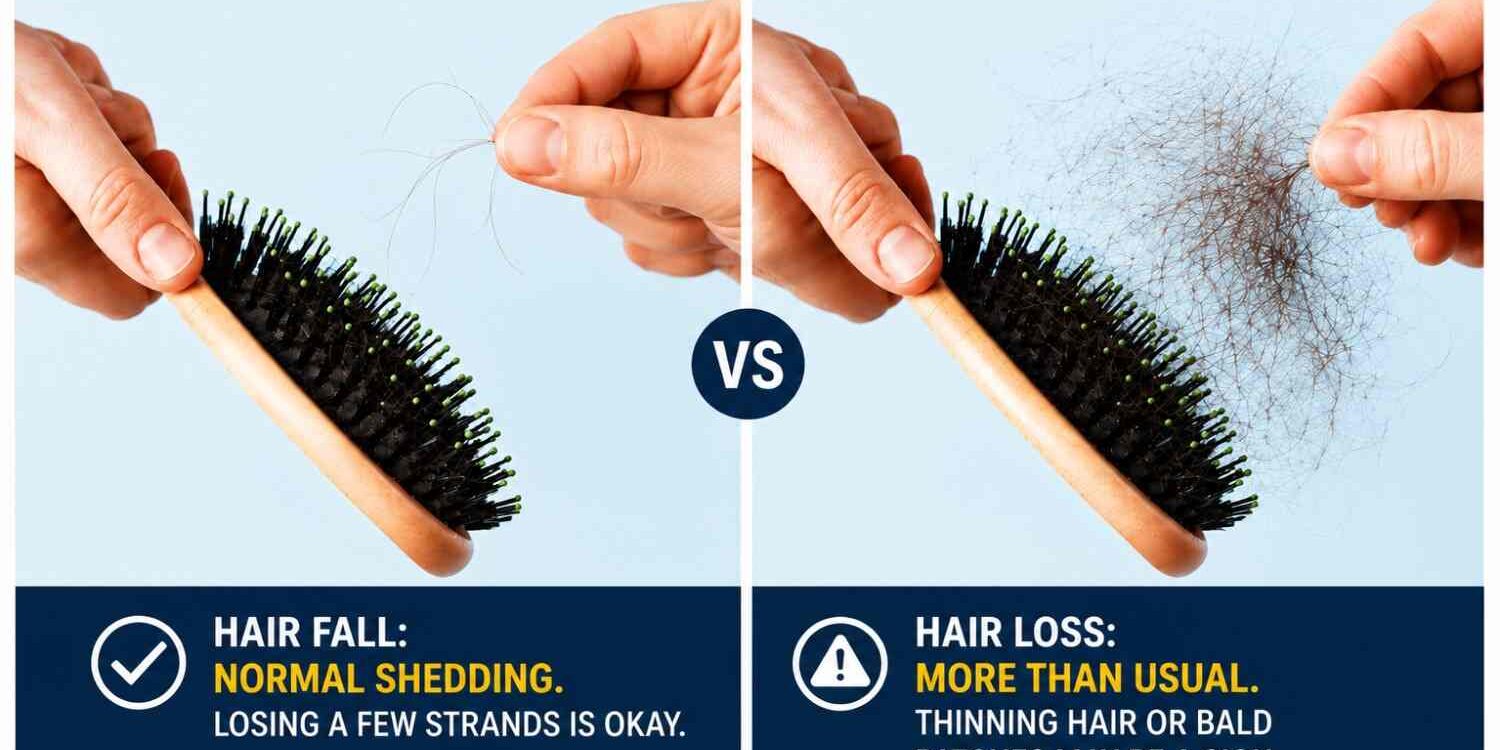
Hair fall vs hair loss describes two different concerns. Normal shedding or hair loss, involves losing about 50 to 100 hairs daily, while hair loss may cause thinning, a receding hairline, or bald spots.
People who notice ongoing thinning or visible scalp changes may consider a professional assessment. A specialist can explain whether treatment, including a hair transplant in the Philippines, may be suitable for their condition.
Hair Fall vs Hair Loss: The Quick Answer
Normal hair fall is part of the natural hair growth cycle. Hair loss happens when the hair becomes thinner, stops growing well, or leaves visible bare areas. Most people lose about 50 to 100 hairs each day. However, few people count every strand, so this number is only a general guide.
Loose hair may look more noticeable because of your daily routine. Several factors can affect how much hair you see:
- How often you wash your hair
- The length and thickness of your hair
- Whether your hair is straight, wavy, or curly
- How often you brush or comb it
- The hairstyles and products you use
Someone who washes their hair every few days may see more strands in the shower. This does not always mean they have a serious problem.
Signs That May Point to Hair Loss
When comparing hair loss vs hair fall, look for clear changes in your hair and scalp. Possible signs include:
- Lower hair density
- A changing or receding hairline
- A wider hair part
- Thinning around the crown
- Small bald areas
- Hair that becomes finer over time
- Little or no visible regrowth
A normal hair fall vs hair loss check should focus on long-term changes, not one heavy shedding day. A shampoo for hair growth may support scalp care, but it cannot diagnose or treat every cause. These signs do not confirm a medical condition. A qualified professional must assess your scalp and hair.
Hair Fall vs Hair Loss Comparison Table
The table below explains hair fall vs hair loss in simple terms. It can help you spot key differences, but it cannot replace a professional scalp check.
| Area | Normal Hair Fall | Possible Hair Loss |
| Meaning | Hair sheds during its natural cycle | Hair becomes thin or stops growing well |
| Usual pattern | Loose strands from many scalp areas | Thinning may follow a clear pattern |
| Hair density | Overall hair fullness stays similar | Hair may lose volume over time |
| Regrowth | New strands often replace shed hair | Regrowth may become slow or limited |
| Duration | May occur daily or increase after a trigger | May continue or slowly become worse |
| Common triggers | Stress, illness, diet changes, or childbirth | Family history, hormones, illness, or scalp problems |
| Visible scalp changes | No clear bald spots or wider part | Receding hairline, wider part, or bald areas |
| When to seek help | Shedding becomes heavy or continues | When you notice clear thinning or scalp changes |
Understanding the Differences
When comparing hair loss vs hair fall, do not focus on one shower or brushing session. Look for changes in hair density, growth, and scalp coverage over time. A normal hair fall vs hair loss review may require a scalp assessment.
A specialist can check the cause before discussing treatments or the scalp micropigmentation cost in the Philippines. Some shedding can last longer than expected. Some forms of hair loss may also improve with proper care. Only a qualified professional can confirm the cause.
Understanding the Normal Hair Growth Cycle
Your hair grows through a natural cycle. Each strand grows, slows down, rests, and falls before a new strand can take its place. Knowing this cycle makes hair fall vs hair loss easier to understand. Normal shedding is part of healthy growth, while hair loss may reduce growth or hair density.
Growth Stage
The growth stage is called the anagen stage. During this time, the hair follicle produces an active strand that grows longer. Most scalp hairs remain in this stage for several years. The length of this stage can affect how long your hair can grow.
A balanced diet, gentle styling, and a simple hair care routine can help protect growing strands. However, hair products cannot control every cause of thinning.
Transition Stage
The transition stage is called the catagen stage. It is a short phase that usually lasts only a few weeks.
During this stage:
- The strand stops growing.
- The follicle becomes smaller.
- The strand separates from its blood supply.
- The follicle prepares to enter a resting phase.
Only a small number of scalp hairs enter this stage at one time.
Resting and Shedding Stages
The resting stage is called the telogen stage. The strand remains in the follicle, but it no longer grows. The exogen stage follows. During this stage, the old strand leaves the scalp. Washing, brushing, or touching the hair may help release it.
A new strand may then begin growing from the same follicle. This process explains why seeing loose strands does not always mean permanent thinning. When comparing hair loss vs hair fall, look at overall density and visible scalp changes. Normal shedding should not cause a steady loss of hair coverage. A normal hair fall vs hair loss check must consider the full growth cycle. Ongoing thinning, bald areas, or limited regrowth may need a professional scalp assessment.
What Is Normal Hair Fall?
Normal hair fall is the natural shedding of old strands. The scalp releases these hairs as part of its regular growth cycle. Most people lose about 50 to 100 hairs each day. This number is only a general guide because daily shedding can vary. You do not need to count every strand. Instead, watch for clear changes in your hair volume, hairline, part, and scalp coverage.
Why Hair Fall Can Look Different
The amount of loose hair you notice depends on several factors. These can make normal shedding appear heavier than it is.
- Hair length: Long strands look more noticeable in a brush or shower drain.
- Hair thickness: Thick strands can make a small group of hairs appear larger.
- Curl pattern: Curly hair can hold loose strands until washing or brushing.
- Washing frequency: Less frequent washing allows shed hairs to collect.
- Brushing frequency: Brushing can release strands that have already completed their cycle.
- Hairstyles: Braids, buns, and tied styles may hold loose hair in place.
- Hair collection: Shed strands may stay between other hairs before becoming visible.
A person who washes their hair every few days may notice many strands during one wash. This does not always mean sudden hair loss. When comparing hair loss vs hair fall, focus on changes that continue over time. One heavy wash day does not provide enough information.
Signs of Normal Hair Shedding
The following signs may fit natural shedding:
- Strands fall from different parts of the scalp.
- Overall hair density appears stable.
- The hairline does not keep moving backward.
- The center part does not become wider.
- No clear bald patches appear.
- Hair volume remains close to normal.
- Short new hairs may become visible over time.
A normal hair fall vs hair loss check should also consider recent events. Stress, illness, childbirth, or a major diet change may increase shedding. However, ongoing thinning or visible scalp changes may need professional attention. A specialist can check your scalp, growth pattern, and health history.
Some people take vitamins for hair loss without knowing the cause. Supplements may not help unless a real deficiency exists. Taking too much can also cause problems. Understanding hair fall vs hair loss can help you avoid panic. Look at long-term changes rather than the number of strands you see each day.
What Is Normal Hair Fall?
Normal hair fall is the natural shedding of old strands. The scalp releases these hairs as part of its regular growth cycle. Most people lose about 50 to 100 hairs each day. This number is only a general guide because daily shedding can vary. You do not need to count every strand. Instead, watch for clear changes in your hair volume, hairline, part, and scalp coverage.
Why Hair Fall Can Look Different
The amount of loose hair you notice depends on several factors. These can make normal shedding appear heavier than it is.
- Hair length: Long strands look more noticeable in a brush or shower drain.
- Hair thickness: Thick strands can make a small group of hairs appear larger.
- Curl pattern: Curly hair can hold loose strands until washing or brushing.
- Washing frequency: Less frequent washing allows shed hairs to collect.
- Brushing frequency: Brushing can release strands that have already completed their cycle.
- Hairstyles: Braids, buns, and tied styles may hold loose hair in place.
- Hair collection: Shed strands may stay between other hairs before becoming visible.
A person who washes their hair every few days may notice many strands during one wash. This does not always mean sudden hair loss. When comparing hair loss vs hair fall, focus on changes that continue over time. One heavy wash day does not provide enough information.
Signs of Normal Hair Shedding
The following signs may fit natural shedding:
- Strands fall from different parts of the scalp.
- Overall hair density appears stable.
- The hairline does not keep moving backward.
- The center part does not become wider.
- No clear bald patches appear.
- Hair volume remains close to normal.
- Short new hairs may become visible over time.
A normal hair fall vs hair loss check should also consider recent events. Stress, illness, childbirth, or a major diet change may increase shedding. However, ongoing thinning or visible scalp changes may need professional attention. A specialist can check your scalp, growth pattern, and health history.
Some people take vitamins for hair loss without knowing the cause. Supplements may not help unless a real deficiency exists. Taking too much can also cause problems. Understanding hair fall vs hair loss can help you avoid panic. Look at long-term changes rather than the number of strands you see each day.
What Is Hair Loss?
Hair loss happens when the scalp produces less hair or when strands stop growing as they should. The medical term for hair loss is alopecia. When comparing hair fall vs hair loss, visible thinning often matters more than one day of heavy shedding. Hair loss may change the hairline, density, or scalp coverage over time.
How Hair Loss Can Develop
Hair loss does not always happen in the same way. It may involve one or more changes in the hair or scalp.
These changes may include:
- Reduced hair production: Some follicles grow fewer new strands.
- Shorter growth periods: Hair stops growing sooner than expected.
- Finer strands: New hair may become thinner with each growth cycle.
- Follicle miniaturization: Follicles become smaller and produce weak strands.
- Inflammation: Scalp swelling or irritation may affect healthy growth.
- Follicle damage: Injury or disease may harm the roots that produce hair.
- Hair breakage: Strands may snap before reaching their normal length.
- Hair pulling: Tight styles or repeated pulling may weaken the hair.
A hair loss vs hair fall review should consider both shedding and visible changes. Loose strands alone do not always show how well new hair is growing.
Different Forms of Hair Loss
Hair loss may appear in several ways:
- Temporary: Hair growth may improve after the main cause is treated.
- Progressive: Thinning may slowly become worse over months or years.
- Patchy: Small, clear areas of hair may disappear.
- Diffuse: Hair may become thin across the whole scalp.
- Patterned: Hair loss may follow a common shape or area.
- Scarring: Damaged follicles may no longer produce new strands.
- Non-scarring: Follicles remain present and may still support regrowth.
Not every type of hair loss is permanent. However, some forms may continue without proper care.
Common Signs of Hair Loss
Possible signs include:
- Receding temples
- Thinning around the crown
- A widening center part
- A smaller or thinner ponytail
- More visible scalp
- Round bald patches
- Uneven hair density
- Hair loss near tight braids or ponytails
- Scalp redness, pain, scale, or sores
A normal hair fall vs hair loss check should focus on changes that continue. One unusual wash day is less important than steady thinning. Scalp problems may also affect hair growth. For example, people may confuse dandruff vs psoriasis, but these conditions have different causes and may need different care. Sudden hair loss, painful scalp changes, or unexplained bald patches need professional assessment. A qualified specialist can examine the scalp and identify the likely cause.
Normal Hair Fall vs Hair Loss Self-Check
This simple checklist can help you review changes in your hair and scalp. However, it is not a medical or diagnostic test. Do not judge your hair based on one wash or one day of heavy shedding. Look for steady changes over several weeks or months.
Signs That May Fit Normal Hair Fall
Normal shedding happens as old strands complete their growth cycle. New strands often grow in their place.
The following signs may fit normal hair fall:
- Your overall hair density looks the same.
- Loose strands come from different parts of your scalp.
- You do not see bald areas getting larger.
- Your hairline has not changed in a clear way.
- Your hair volume remains close to normal.
- Shedding slows after a short-term trigger passes.
- Small new hairs become visible over time.
- Your center part does not keep getting wider.
- Your scalp does not show new bare areas.
Stress, illness, childbirth, weight changes, or a new routine may increase shedding for a time. Still, these signs cannot confirm the cause. When reviewing hair loss vs hair fall, focus on hair coverage and regrowth. Do not count every loose strand, since this may cause added worry.
Signs That May Point to Hair Loss
Hair loss may cause clear and lasting changes in hair density or growth. These signs deserve closer attention:
- Your hairline keeps moving backward.
- Your center part becomes wider.
- The hair around your crown becomes thinner.
- Round or uneven bald patches appear.
- Your hair slowly loses volume.
- New strands look finer and shorter.
- Your scalp becomes red, sore, itchy, or scaly.
- You notice sores, swelling, or heavy flakes.
- Your eyebrows, eyelashes, beard, or body hair also change.
- Hair loss continues without clear new growth.
- Your scalp becomes easier to see in photos.
A normal hair fall vs hair loss check should consider changes over time. Sudden or unexplained changes need a professional scalp assessment.
Track Changes Without Checking Every Day
Take clear photos once each month. Use the same room, light, hairstyle, angle, and camera distance each time. Photos can show slow changes that may be hard to notice in a mirror. Avoid checking your scalp many times each day.
A gentle product, such as Maxim shampoo and conditioner, may support regular scalp and hair care. However, shampoo cannot diagnose or treat every cause of thinning. Understanding hair fall vs hair loss can guide your next step. A qualified professional should assess ongoing shedding, bald patches, scalp pain, or visible thinning.
Common Causes of Hair Fall and Hair Loss
Many things can lead to more shedding or visible thinning. Increased hair fall does not always mean that the hair loss will be permanent. When comparing hair fall vs hair loss, it helps to look at recent health changes, stress, diet, scalp problems, and styling habits. Some causes lead to short-term shedding. Others may affect the hair for a longer time. A professional assessment can help find the likely cause.
Physical or Emotional Stress
Strong physical or emotional stress can affect the normal hair growth cycle.
Common triggers may include:
- Major illness
- High fever
- Surgery
- Serious injury
- Emotional stress
- Recovery from a health problem
Hair may start shedding weeks or months after the stressful event. This can make it hard to connect the shedding with the original cause. The hair may improve after the body recovers. However, the timing and amount of regrowth can differ from person to person.
Childbirth and Hormonal Changes
Hormone changes can also affect hair growth. Some women notice more shedding after giving birth. This is often called postpartum hair shedding. During pregnancy, hormone changes can keep more hairs in the growth stage. After childbirth, many of these hairs may shed within a similar period.
This can make the hair look much thinner for a time. There is no exact recovery period that applies to everyone. Speak with a healthcare professional if the shedding is severe or continues.
Rapid Weight Loss or Diet Changes
A sudden change in diet can affect the hair cycle. Very low-calorie diets may reduce the amount of protein, iron, and other nutrients the body receives. Fast weight loss may also place stress on the body. This can lead to more shedding in some people. Avoid taking vitamins or supplements without proper advice. A healthcare professional may recommend tests if they think a nutrient problem is involved.
Medication and Health Changes
Some medicines and health conditions may affect hair growth. Hair shedding can sometimes happen after starting, stopping, or changing certain medicines. However, many other causes may also be involved.
Never stop prescribed medicine because of hair shedding without speaking with the doctor who prescribed it. Health problems can also affect the hair cycle. A proper medical review can help find out whether another condition may be involved.
Hair and Scalp Practices
Daily hair care can affect both the scalp and the hair strands. Repeated heat, strong chemical treatments, and tight hairstyles can weaken the hair.
Pulling styles may include:
- Tight ponytails
- Braids
- Buns
- Extensions
- Cornrows
It is also important to know the difference between shedding and breakage. Shedding happens when the whole strand leaves the scalp. Breakage happens when the strand snaps along its length.
A super itchy scalp and hair loss may also need closer attention. Severe itching can come with scalp irritation, inflammation, or another skin problem. The right treatment for itchy scalp and hair loss depends on the cause. Using random products may not solve the problem.
Androgenetic Alopecia
Androgenetic alopecia is also called pattern hair loss. It can affect both men and women. Genetics and sensitivity to certain hormones may play a role.
Men may notice:
- A receding hairline
- Thinning at the temples
- Crown thinning
- More visible scalp
Women may notice:
- A wider center part
- Less hair volume
- Thinning over the top of the scalp
- A smaller ponytail
These patterns can differ from one person to another. In pattern hair loss, some follicles slowly become smaller. They may then produce thinner and shorter strands. This is one reason the hair fall vs hair loss difference should not depend only on how many hairs you see in the shower.
Alopecia Areata
Alopecia areata can cause round or uneven areas of hair loss. It happens when the immune system attacks hair follicles by mistake. Some people develop one small patch. Others may have several areas of hair loss. The condition can affect scalp hair and other body hair. A professional should assess sudden bald patches rather than trying to diagnose them at home.
Traction Alopecia
Traction alopecia happens when repeated pulling places too much stress on the hair. Tight hairstyles are a common cause. Early changes may improve when the pulling stops. However, long-term tension can damage the follicles. This damage may lead to lasting hair loss in some cases. Signs may include thinning around the front, temples, or areas under repeated tension.
Scalp and Skin Conditions
Scalp problems can sometimes lead to itching, flakes, redness, pain, or hair changes. Possible causes of itchy scalp and hair loss include irritation, inflammation, infection, and certain skin conditions.
Seek medical advice if you notice:
- Severe itching
- Pain or burning
- Open sores
- Pus or discharge
- Heavy scaling
- Swelling
- Sudden hair loss
The best itchy scalp and hair loss treatment depends on what is causing the problem. Different scalp conditions may look similar but need different care.
Scarring Hair Loss
Some types of hair loss can damage follicles through inflammation. This is called scarring hair loss. Once a follicle becomes badly scarred, it may no longer produce hair. Early medical assessment is important when hair loss comes with pain, burning, redness, smooth bald areas, or scalp sores. Do not wait for the area to become larger before seeking advice.
Medical and Hormonal Conditions
Some health conditions may also affect hair growth.
Possible factors include:
- Thyroid problems
- Iron deficiency
- Hormonal changes
- Autoimmune conditions
- Long-term illness
- Major changes in overall health
These problems cannot be confirmed by hair loss alone. Blood tests or other checks may be needed in some cases. A healthcare professional can decide which tests are useful. Understanding hair fall vs hair loss can help you notice when a change may need more attention. Sudden thinning, bald patches, or scalp symptoms should be checked by a qualified professional.
How Hair Loss Looks and How Professionals Assess It?
Hair loss can affect men and women. The pattern may look different from one person to another. Some people notice slow thinning. Others see a changing hairline, wider part, or small bald areas. When comparing hair fall vs hair loss, the pattern and amount of visible thinning matter. A professional can review these changes and look for the likely cause.
Common Hair Loss Patterns in Men
Men often notice changes around the hairline or crown.
Common signs may include:
- Receding hair at the temples
- An M-shaped hairline
- Thinning around the crown
- Less hair density on top
- More visible scalp
- Thin areas that slowly grow larger
In some men, the temples and crown become thinner at the same time. These areas may slowly move closer together as hair loss continues. The change is often gradual. This can make it hard to notice at first. Photos taken several months apart may show the difference more clearly. However, not every man follows the same pattern. Some may have even thinning across the scalp or other scalp problems.
Common Hair Loss Patterns in Women
Women can also develop visible thinning.
Common signs may include:
- A wider center part
- Less hair density over the top
- A thinner ponytail
- More visible scalp
- Reduced volume
- Changes near the front hairline
Some women may also notice thinning around the temples or front of the scalp. A receding hairline can happen, although the pattern may differ from men. The difference between hair loss vs hair fall is not always clear from one sign.
For example, heavy shedding can make the hair feel thinner for a time. Long-term hair loss may slowly reduce density even when daily shedding does not seem heavy. A normal hair fall vs hair loss review should look at the full pattern. Men and women can have similar symptoms for different reasons. This is why each person needs an individual assessment.
What Happens During a Hair and Scalp Assessment?
A professional consultation usually starts with questions about your hair and health.
The specialist may ask about:
- When the shedding or thinning started
- Where you first noticed the change
- Your family history of hair loss
- Recent illness or surgery
- Pregnancy or recent hormonal changes
- Medicines you currently take
- Changes in diet or body weight
- Major stress
- Hair products you use
- Hairstyles that pull on the scalp
- Heat or chemical treatments
These details can help show whether the change started after a clear trigger or developed slowly over time.
Checking the Hair and Scalp
The professional may then examine your hair and scalp.
They may look at:
- Hair density
- The shape of the hairline
- The width of the center part
- Crown coverage
- Bald or thin areas
- Broken strands
- Redness or irritation
- Flakes or scaling
- Signs of inflammation
- Areas affected by tight hairstyles
A visual scalp check can provide useful clues. However, appearance alone may not confirm the cause.
Other Tests That May Be Used
Some people may need more checks. Not every patient needs every test. A professional may use a gentle hair-pull test when appropriate. This checks how easily several strands come away from the scalp. A magnified scalp check may also help. It allows the specialist to see the follicles and hair shafts more closely.
Blood tests may be requested when a health or nutrient issue is suspected. These may help check certain medical causes of thinning. In selected cases, a doctor may recommend a small scalp biopsy. This involves taking a small skin sample for closer examination. It is usually reserved for cases where the cause remains unclear or certain scalp conditions are suspected.
Finding the Cause Comes First
A proper hair fall vs hair loss assessment should come before choosing treatment. The same symptom can have several possible causes. Thinning may relate to genetics, hormones, illness, stress, scalp disease, diet, or styling habits.
Treatment should match the cause. A professional can explain which tests are useful and which options may fit your condition. This helps avoid spending money on treatments that may not address the real problem.
Get Clear Answers About Your Hair Loss!
If you are unsure about hair fall vs hair loss, a professional hair and scalp assessment can help you understand what may be causing the change. Maxim Hair Restoration – Philippines can review your hair pattern, scalp condition, and personal history before discussing suitable options. Contact us to schedule a consultation and learn which next steps may be right for your needs.
FAQs
1. What is the difference between hair fall vs hair loss?
Hair fall usually means normal shedding as old strands leave the scalp. Hair loss can cause lasting thinning, bald areas, or changes in hair density. The main difference is whether new hair keeps replacing the strands that fall. A professional assessment can help if you notice ongoing thinning or visible scalp changes.
2. How much hair fall is normal each day?
Many people lose around 50 to 100 hairs each day as part of the normal growth cycle. The amount can look different based on hair length, washing habits, brushing, and styling. You do not need to count every strand. It is more useful to watch for clear changes in hair volume or scalp coverage.
3. How can I tell normal hair fall vs hair loss?
Look at how your hair changes over time. Normal shedding usually does not cause a wider part, receding hairline, or bald patches. When comparing normal hair fall vs hair loss, watch for lower density, finer strands, or areas that keep thinning. These signs still need a professional assessment for a clear answer.
4. Can stress cause hair loss vs hair fall?
Yes. Strong physical or emotional stress can increase shedding in some people. Illness, surgery, fever, major weight loss, or emotional stress may affect the hair growth cycle. This does not always mean permanent hair loss. If shedding continues or becomes worse, speak with a qualified healthcare professional.
5. When should I seek professional help for hair loss?
Consider an assessment if you notice sudden shedding, bald patches, a receding hairline, crown thinning, a wider part, scalp pain, redness, or ongoing loss without regrowth. A specialist can review your scalp, health history, and hair pattern. This can help identify the likely cause before any treatment is considered.