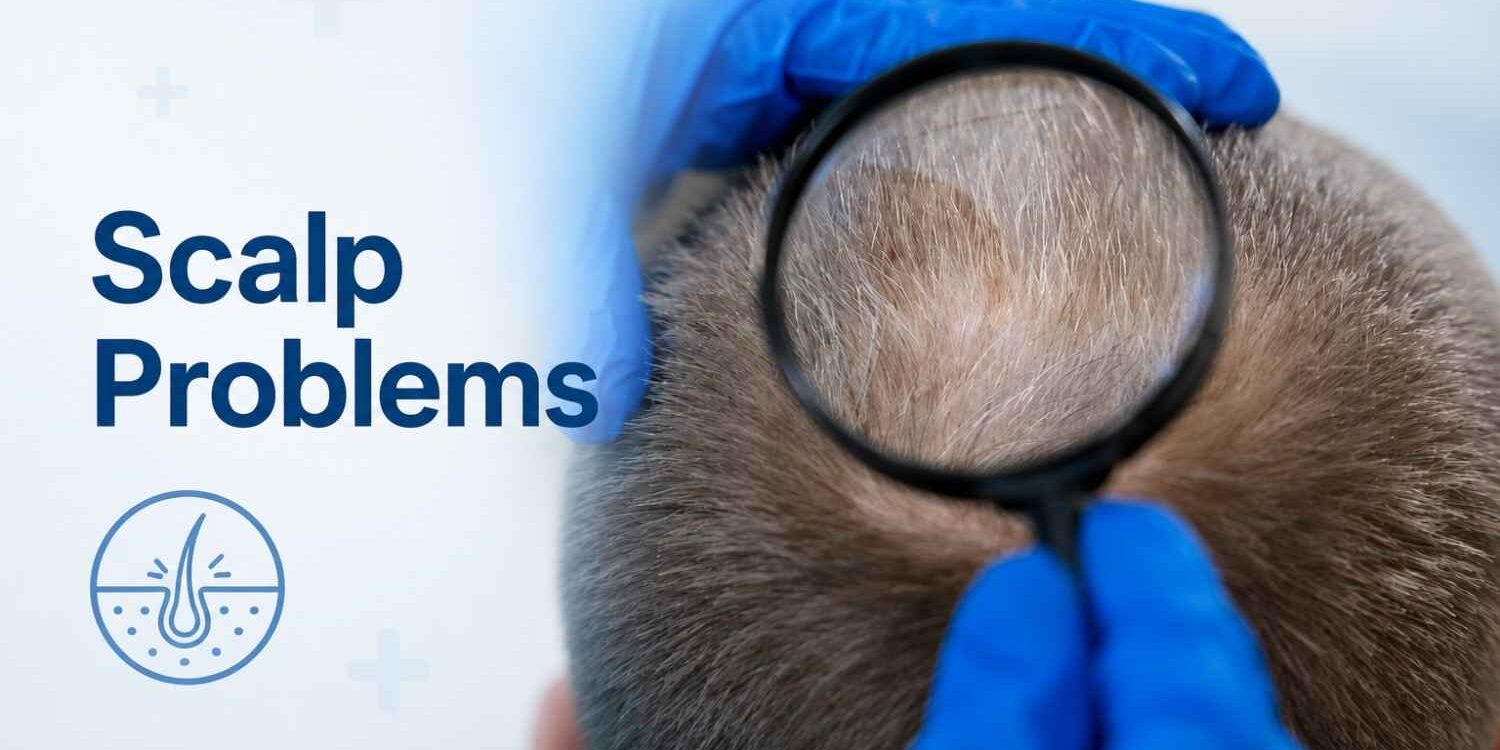
Scalp problems like itching and flaking are often caused by dandruff, dry skin, or contact dermatitis. Washing your hair with a medicated shampoo, such as one containing ketoconazole, for about five minutes, two to three times a week may help improve symptoms. If you notice redness, thick scales, ongoing irritation, or hair loss, consult a dermatologist for a proper diagnosis and treatment.
Maxim Hair Restoration – Philippines can help assess scalp concerns linked to hair thinning or shedding. A proper check can help you understand the cause and choose the right next step for healthier scalp and hair.
Types of Hair Scalp Problems You Should Know
There are many types of hair scalp problems that can affect people of all ages. Some are mild and easy to treat, while others need medical care. Learning about the types of scalp problems can help you notice early signs and choose the right scalp problems treatment.
A healthy scalp supports healthy hair. When the scalp becomes dry, oily, or irritated, it can affect hair growth. In some cases, long-term scalp conditions may even lead to hair thinning. If symptoms continue, it is best to seek professional advice before they become worse.
Dandruff
Dandruff is one of the most common scalp conditions. It causes small white or yellow flakes that fall from the scalp. Many people also have itching.
Symptoms
- White or yellow flakes
- Itchy scalp
- Mild redness
- Dry or oily scalp
Causes
Dandruff may develop because of:
- Too much oil on the scalp
- Dry skin
- A natural yeast on the scalp
- Stress
- Cold weather
Treatment
Many cases improve with medicated shampoos. Products with ketoconazole, zinc pyrithione, or selenium sulfide can help reduce flakes. Washing your hair regularly also helps keep the scalp clean.
Seborrheic Dermatitis
Seborrheic dermatitis is a more serious form of dandruff. It causes oily, yellow flakes and red skin. The scalp may feel itchy and sore. This condition often comes and goes. Stress and weather changes may make it worse. Treatment usually includes medicated shampoos and creams recommended by a healthcare professional.
Dry Scalp
A dry scalp happens when the skin loses moisture. It often feels tight and itchy.
Common signs include:
- Small white flakes
- Dry skin
- Tight feeling
- Mild itching
Using a gentle shampoo, drinking enough water, and avoiding very hot showers may help improve symptoms.
Scalp Psoriasis
Scalp psoriasis is a long-term skin condition. It causes thick, raised patches with silver-colored scales.
People may notice:
- Thick flakes
- Red patches
- Itching
- Dry skin
- Cracked skin
Treatment often includes medicated shampoos, creams, or prescription medicine.
Folliculitis
Folliculitis happens when hair follicles become inflamed. Small bumps may appear on the scalp and can look like pimples.
Common symptoms include:
- Red bumps
- Tender skin
- Itching
- Small pus-filled spots
Keeping the scalp clean and following medical advice can help prevent the condition from getting worse.
Contact Dermatitis
Contact dermatitis develops when the scalp reacts to a product.
Common triggers include:
- Hair dye
- Shampoo
- Hair spray
- Styling products
- Fragrances
Symptoms often include redness, burning, itching, and swelling. Avoiding the product that caused the reaction is usually the first step.
Fungal Scalp Infection
A fungal infection can affect both children and adults. It spreads through direct contact or shared personal items.
Signs may include:
- Round patches
- Itching
- Flaking
- Broken hairs
- Hair loss
Doctors usually treat fungal infections with prescription antifungal medicine.
Ringworm
Ringworm of the scalp is a common fungal infection. It creates round patches where hair may break close to the skin. Early treatment helps stop the infection from spreading.
Scalp Eczema
Scalp eczema causes dry, itchy, and inflamed skin. Scratching can make the condition worse.
People may notice:
- Dry patches
- Red skin
- Itching
- Flaking
Gentle hair care products and moisturizing treatments may help reduce symptoms.
Oily Scalp
An oily scalp produces too much natural oil. Hair may look greasy only a short time after washing.
Common signs include:
- Greasy hair
- Oily flakes
- Itching
- Product buildup
Regular washing with the right shampoo can help control excess oil.
Sensitive Scalp
A sensitive scalp reacts easily to weather, hair products, or heat.
Symptoms may include:
- Burning
- Tingling
- Itching
- Tenderness
- Redness
Choosing gentle hair care products and avoiding harsh chemicals may reduce irritation.
Why Early Care Matters?
Many types of hair scalp problems improve when treated early. Ignoring symptoms may lead to discomfort, infections, or hair thinning. If your scalp stays itchy, painful, or inflamed, seek professional care for the right scalp problems treatment.
Healthy scalp care also supports healthy hair growth. If scalp problems have caused noticeable hair loss, you may want to learn more about hair transplant cost and whether a hair transplant in the Philippines could be an option after your scalp condition has been properly treated. A specialist can help determine the best treatment for your scalp and long-term hair health.
Common Symptoms of Scalp Problems
Scalp problems can cause many signs that are easy to notice. Some symptoms are mild, while others may become worse over time. Knowing these signs can help you get the right scalp problems treatment before the condition affects your scalp and hair.
Many types of scalp problems share similar symptoms. Paying attention to changes in your scalp can help you find the cause sooner. If symptoms continue or become more severe, it is best to seek professional advice.
Itching
Itching is one of the most common signs of scalp problems. Your scalp may itch all day or only at certain times. Scratching may give short-term relief, but it can also damage your skin and make the problem worse.
Common causes include:
- Dandruff
- Dry scalp
- Allergies
- Fungal infections
- Product buildup
Redness
Redness often means the scalp is irritated or inflamed. It may appear in one small area or across the whole scalp. Red skin can feel warm, itchy, or tender.
Redness is often linked to:
- Skin irritation
- Contact dermatitis
- Seborrheic dermatitis
- Scalp psoriasis
Flakes and Scaling
Flakes and scaling are common with many types of hair scalp problems. Small flakes often fall onto your shoulders, while thicker scales may stick to the scalp.
Flakes may appear because of:
- Dandruff
- Dry scalp
- Seborrheic dermatitis
- Psoriasis
If flakes continue after using regular shampoo, you may need a different scalp problems treatment.
Pimples on the Scalp
Small bumps or pimples may form when hair follicles become blocked or infected. These bumps can feel sore when touched.
You may notice:
- Red bumps
- Whiteheads
- Tender areas
- Mild swelling
Keeping your scalp clean may help, but ongoing pimples should be checked by a healthcare professional.
Pain or Tenderness
A healthy scalp should not hurt. Pain may happen because of infection, inflammation, or frequent scratching.
You may feel:
- Soreness
- Burning
- Tender spots
- Pain while brushing your hair
Pain that does not improve should never be ignored.
Sores and Open Areas
Some scalp problems may cause sores or broken skin. These areas may bleed, form scabs, or release fluid if they become infected. Avoid scratching sores because this may slow healing and increase the risk of infection.
Swelling
Swelling is another sign that something is irritating your scalp. It may happen with infections, allergic reactions, or inflamed hair follicles. You should seek medical advice if swelling is painful or spreads quickly.
Hair Thinning
Hair thinning can happen when scalp conditions affect healthy hair growth. Ongoing inflammation may weaken hair follicles over time.
You may notice:
- Less hair volume
- A wider hair part
- Thin areas across the scalp
Treating the scalp condition early may help protect healthy hair.
Hair Shedding
It is normal to lose some hair each day. However, heavy shedding may be linked to certain types of scalp problems.
You may notice:
- More hair on your pillow
- Hair in the shower drain
- Hair left on your brush
- Increased shedding while washing your hair
If shedding continues for several weeks, a professional evaluation is recommended.
Bad Odor
A healthy scalp should not have a strong smell. A bad odor may develop because of excess oil, bacteria, fungal growth, or product buildup. Good scalp hygiene and proper treatment can often improve this symptom.
Oily Patches
Some people produce too much oil on the scalp. Oily patches can make hair look greasy soon after washing.
You may also notice:
- Sticky hair
- Yellow flakes
- Itching
- Product buildup
Using the right shampoo for your scalp type can help control excess oil. If hair thinning is also a concern, ask a specialist whether a shampoo for hair growth is suitable for your needs.
Dry Patches
Dry patches often feel rough, tight, or itchy. They may peel or flake, especially during cold or dry weather.
Dry patches may develop because of:
- Dry skin
- Eczema
- Psoriasis
- Harsh hair products
Using gentle hair care products and following the right scalp problems treatment plan may help improve scalp comfort.
When Symptoms Should Not Be Ignored?
Many types of hair scalp problems improve with early care. However, symptoms that last for several weeks, become painful, or lead to heavy hair loss should be checked by a qualified healthcare professional.
Early treatment can help reduce discomfort and prevent further scalp damage. A proper diagnosis also helps identify the exact types of scalp problems affecting your scalp, making it easier to choose the most effective treatment and support healthy hair growth.
What Causes Scalp Problems?
Scalp problems can happen for many reasons. Some causes are easy to manage, while others need medical care. Knowing what causes these conditions can help you protect your scalp and choose the right treatment.
Many common scalp problems develop because of more than one factor. Your daily habits, health, and environment can all affect your scalp. Learning about these causes can also help you build a better hair care routine and lower the risk of future problems.
Poor Hygiene
Not washing your hair often enough can allow oil, sweat, and dirt to build up on your scalp. This buildup may block hair follicles and increase the risk of irritation.
Poor scalp hygiene may lead to:
- Itching
- Flakes
- Bad odor
- Oily scalp
- Some common scalp problems
Washing your hair with the right shampoo helps keep your scalp clean and healthy.
Genetics
Some people are more likely to develop scalp problems because of their family history. Certain scalp conditions can run in families.
You may have a higher risk of:
- Dandruff
- Psoriasis
- Oily scalp
- Sensitive skin
While you cannot change your genes, proper scalp care may help reduce symptoms.
Hormones
Hormone changes can affect the amount of oil your scalp produces. Too much oil may increase the chance of irritation and flakes.
Hormonal changes may happen during:
- Puberty
- Pregnancy
- Menopause
- Certain medical conditions
Keeping a healthy lifestyle may help support normal scalp health.
Stress
Stress affects many parts of the body, including your scalp. It may make existing scalp conditions worse or trigger new symptoms.
Stress may lead to:
- Itching
- Increased hair shedding
- More dandruff
- Sensitive scalp
Getting enough rest and managing stress may improve your overall scalp health.
Weather
Hot, cold, humid, or dry weather can all affect your scalp. Seasonal changes may cause dryness, extra oil, or irritation.
For example:
- Cold weather may dry out the scalp.
- Hot weather may increase sweat and oil.
- Humid weather may encourage fungal growth.
Protecting your scalp from harsh weather is an important part of a good hair care routine.
Product Buildup
Hair products can leave residue on the scalp over time. If the buildup is not removed, it may block hair follicles and cause discomfort.
Common products that may build up include:
- Hair sprays
- Gels
- Waxes
- Dry shampoo
- Heavy conditioners
Using a gentle cleansing shampoo regularly can help remove excess product.
Hair Dyes
Hair dyes and chemical treatments may irritate sensitive skin. Some people develop redness, itching, or swelling after coloring their hair.
You may lower your risk by:
- Performing a patch test first
- Following product instructions
- Avoiding products that have caused reactions before
Skin Conditions
Some skin conditions can affect the scalp as well as other parts of the body. These conditions often need ongoing care.
Examples include:
- Eczema
- Psoriasis
- Seborrheic dermatitis
These are among the different scalp problems that may return from time to time.
Bacteria
Bacteria can enter the skin through small cuts or damaged hair follicles. This may lead to infections that cause redness, pain, and bumps. Keeping the scalp clean and avoiding scratching can help reduce the risk of infection.
Fungi
Certain fungi naturally live on the skin. When they grow too much, they may cause itching, flakes, or infections.
Fungal conditions may lead to:
- Ringworm
- Dandruff
- Oily flakes
Early treatment can help stop the infection from spreading.
Autoimmune Disease
Some autoimmune diseases cause the body’s immune system to attack healthy skin cells. This can lead to long-term scalp problems.
These conditions may cause:
- Thick scales
- Red patches
- Hair thinning
- Ongoing inflammation
Medical care is usually needed to manage these conditions.
Allergies
Your scalp may react to ingredients found in shampoos, conditioners, hair dyes, or styling products.
Signs of an allergic reaction include:
- Itching
- Redness
- Burning
- Swelling
- Rash
If symptoms appear after using a new product, stop using it and seek medical advice if needed.
Diet
A balanced diet supports healthy skin and hair. Poor nutrition may affect your scalp over time.
Your body needs nutrients such as:
- Protein
- Iron
- Zinc
- Healthy fats
- Vitamins
Eating a healthy diet supports both your scalp and your hair.
Medical Conditions
Some health conditions can affect your scalp and hair. They may increase the risk of irritation, inflammation, or hair loss.
Examples include:
- Diabetes
- Thyroid disorders
- Hormonal disorders
- Immune system conditions
Treating the underlying condition may also improve your scalp health.
Protect Your Scalp Every Day
Many head scalp problems can be reduced with healthy daily habits. Wash your hair regularly, choose products that match your scalp type, and avoid harsh chemicals whenever possible.
A simple hair care routine can help lower the risk of common scalp problems and support healthier hair. If symptoms continue, become painful, or cause heavy hair loss, seek professional advice. Early care can help identify the different scalp problems affecting your scalp and guide you toward the most effective treatment.
Can Scalp Problems Cause Hair Loss?
Yes, scalp problems can lead to hair loss in some cases. The effect may be mild, short-term, or more serious. It depends on the cause and how long the condition lasts.
A healthy scalp gives hair a good place to grow. When the scalp becomes sore, swollen, infected, or blocked, hair growth may slow down. Early care can help protect the scalp and reduce the risk of more hair loss.
Inflammation Can Weaken Hair Roots
Inflammation happens when the scalp becomes red, sore, or swollen. It can affect the small hair roots under the skin.
Long-term inflammation may:
- Weaken hair roots
- Slow hair growth
- Cause more hair shedding
- Make the scalp feel sore
Some types of scalp problems, such as psoriasis and eczema, can cause ongoing inflammation. The hair may grow back once the condition improves.
Blocked Hair Follicles Can Slow Growth
Hair grows from small openings in the scalp called follicles. Oil, dead skin, sweat, and hair products can block these openings.
Blocked follicles may lead to:
- Scalp pimples
- Itching
- Tender spots
- Slow hair growth
- Weak hair strands
A simple hair care routine can help reduce buildup. Regular washing with a gentle shampoo may keep the scalp clean without making it too dry.
Scalp Infections May Cause Hair Loss
Bacterial and fungal infections can damage the scalp and hair roots. Some infections cause round bald spots or broken hairs.
For example, scalp ringworm may cause:
- Round patches of hair loss
- Dry or scaly skin
- Broken hair
- Itching
- Redness
Folliculitis can also cause small, sore bumps around the hair roots. A doctor may recommend medicine as part of the right scalp problems treatment.
Scratching Can Damage the Scalp
An itchy scalp can be hard to ignore. However, strong or repeated scratching can break the skin.
Scratching may cause:
- Open sores
- Scabs
- Bleeding
- Infection
- Broken hairs
Keeping your nails short may lower the risk of damage. It is also important to treat the cause of the itching.
Some Hair Shedding Is Temporary
Many types of hair scalp problems cause temporary shedding. The hair roots may stay healthy, even when more hair falls out than usual.
Temporary hair loss may happen because of:
- Dandruff
- Stress
- Mild scalp irritation
- Product reactions
- Short-term infections
Hair often starts to grow again after the scalp heals. This process may take time, so patience is important.
Untreated Conditions May Cause Lasting Damage
Most scalp conditions do not cause permanent hair loss. However, severe or long-term problems may damage the hair roots.
This can happen when:
- An infection spreads
- Deep sores form
- Scar tissue develops
- Inflammation lasts for a long time
- A person keeps scratching the same area
Once scar tissue replaces healthy skin, hair may not grow back in that spot. This is why early scalp problems treatment matters.
Examples of Scalp Conditions Linked to Hair Loss
Different conditions can affect the hair in different ways.
- Dandruff: Heavy scratching may break hair and increase shedding.
- Psoriasis: Thick scales may pull out hair during washing or brushing.
- Ringworm: Fungal growth may cause round bald patches.
- Folliculitis: Infection may weaken or damage hair roots.
- Contact dermatitis: A reaction to hair dye may cause swelling and shedding.
- Seborrheic dermatitis: Oil and flakes may lead to itching and broken hairs.
These types of scalp problems need different forms of care. A proper check can help find the exact cause.
How to Lower the Risk of Hair Loss
Good daily care can help protect both your scalp and hair.
Try these simple steps:
- Wash your hair as needed.
- Use gentle hair products.
- Avoid scratching your scalp.
- Keep brushes and combs clean.
- Limit strong dyes and harsh chemicals.
- Treat infections early.
- Follow a steady hair care routine.
- Ask a doctor about sudden or heavy shedding.
When to Seek Professional Help?
See a doctor or scalp specialist if you notice:
- Sudden bald patches
- Heavy hair shedding
- Painful scalp sores
- Pus or swelling
- Thick scales
- Bleeding
- Hair loss that lasts for weeks
Early care can prevent some scalp problems from getting worse. It can also help protect healthy hair roots and support future growth.
Take the Next Step Toward a Healthier Scalp!
Do not let scalp problems affect your comfort, confidence, or hair growth. Maxim Hair Restoration – Philippines can help assess your scalp and guide you toward the right care. Contact us today to book a consultation and learn which treatment may best support your scalp and hair.
FAQs
1. What are the most common scalp problems?
Common scalp problems include dandruff, dry scalp, oily scalp, psoriasis, eczema, folliculitis, and fungal infections. These conditions may cause itching, flakes, redness, bumps, or soreness. Some may also lead to hair shedding when left untreated.
2. Can scalp problems cause permanent hair loss?
Most scalp problems cause only temporary hair loss. Hair may grow back after the condition improves. However, severe infections, deep sores, or long-term inflammation can damage hair roots. Early treatment may help lower the risk of lasting hair loss.
3. How do I know if I have dandruff or a dry scalp?
Dandruff often causes larger, oily, or yellow flakes. A dry scalp usually causes smaller white flakes and tight skin. Both may cause itching. A doctor can help if the signs do not improve with gentle shampoo or basic scalp care.
4. What is the best scalp problems treatment?
The right scalp problems treatment depends on the cause. Medicated shampoo may help with dandruff or fungal growth. Creams or medicine may be needed for psoriasis, eczema, or infection. A proper check is important before starting treatment.
5. When should I see a doctor for scalp problems?
See a doctor if you have pain, swelling, bleeding, pus, thick scales, bald patches, or heavy hair shedding. You should also seek help if symptoms last for several weeks. Early care can help protect your scalp and hair.