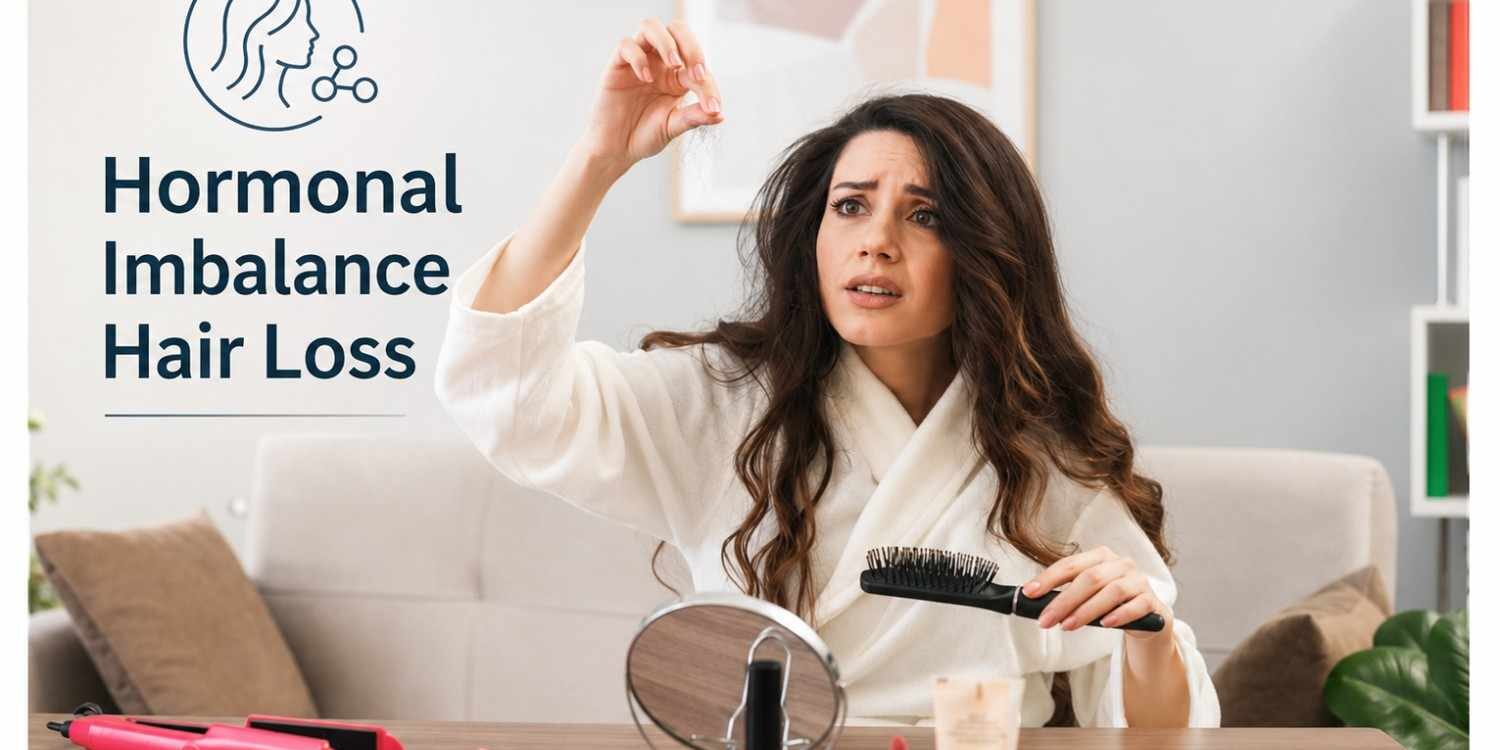
Hormonal imbalance hair loss happens when changes in estrogen, progesterone, androgens (such as DHT), or thyroid hormones disrupt the normal hair growth cycle. This can cause hair follicles to shrink (miniaturization) or enter the shedding phase too early. Common triggers include menopause, polycystic ovary syndrome (PCOS), and thyroid disorders.
Early diagnosis is important because treating the underlying hormone imbalance may help reduce hair shedding and support healthier hair growth. At Maxim Hair Restoration – Philippines, our experienced team evaluates the possible causes of hair loss and recommends personalized treatment options based on each patient’s condition, helping them achieve healthier, fuller-looking hair.
What Is Hormonal Imbalance Hair Loss?
Hormonal imbalance hair loss happens when the hormones in my body are not balanced. Hormones are natural chemicals that tell different parts of the body what to do. They also help control how my hair grows. So, when these hormones change too much, my hair may become thinner or fall out more than usual.
Many people think losing some hair every day is a problem. However, that is not always true. It is normal to lose about 50 to 100 hairs each day because new hair grows to replace the old ones. When hormones become unbalanced, this natural cycle can slow down or stop. As a result, more hair falls out than grows back.
Understanding the Hair Growth Cycle
My hair grows in a repeating cycle. In other words, each hair goes through different stages before it falls out and starts growing again.
The hair growth cycle has three main stages:
- Growing stage (Anagen): Hair grows longer and stronger.
- Resting stage (Catagen): Hair stops growing for a short time.
- Shedding stage (Telogen): Old hair falls out, and new hair begins to grow.
When hormones stay balanced, this cycle works well. Therefore, my hair stays healthy, thick, and full.
Why Hormone Balance Matters?
Hormones help many parts of my body work properly. Also, they help keep my hair follicles healthy. Hair follicles are tiny openings in the scalp where each strand of hair grows.
When hormone levels become too high or too low, the follicles may not work as they should. Some follicles become smaller and weaker. Others stop growing healthy hair. Over time, the hair becomes thinner, finer, and easier to shed. This is one reason why hormonal hair loss can happen in both men and women.
How Hormones Affect Hair Follicles?
Different hormones have different jobs. For instance, estrogen helps support healthy hair growth in many women. Testosterone and a hormone called DHT can make some hair follicles shrink if the body is sensitive to them. Thyroid hormones also help control how fast the body works, including hair growth.
When these hormones become unbalanced, the hair cycle changes. Hair may spend less time growing and more time resting or shedding. As a result, the scalp may look thinner over time.
Normal Hair Shedding vs. Abnormal Hair Loss
It is normal to lose some hair every day. After that, new hair usually grows from the same follicle. This keeps the hair looking full. Abnormal hair loss is different. The body sheds more hair than it can replace. You may notice:
- More hair on your pillow
- More hair in the shower
- Hair left on your hairbrush
- A wider hair part
- Thinner hair around the scalp
- Hair that grows back finer than before
These signs may point to hormonal imbalance hair loss, especially when the shedding continues for several weeks or months.
Can Hormonal Imbalance Cause Hair Loss?
Yes. Above all, the answer is yes. If you have ever wondered, can hormonal imbalance cause hair loss, the answer is that changing hormone levels can interrupt the normal hair growth cycle. This may lead to more shedding, slower regrowth, and thinner hair over time.
Hormone changes can happen because of menopause, pregnancy, childbirth, thyroid problems, polycystic ovary syndrome (PCOS), stress, aging, or certain medicines. These changes may affect anyone, although hair loss in women is especially common during pregnancy, after childbirth, and during menopause. The good news is that many cases of hormonal imbalance hair loss can improve once the underlying hormone problem is found and treated. Getting help early may reduce hair shedding and support healthier hair growth.
How Hormones Affect Hair Growth
Hormones help control many parts of my body, including my hair. So, when my hormones stay balanced, my hair has a better chance to grow strong and healthy. When hormone levels change too much, the normal hair growth cycle can slow down. This may lead to hormonal imbalance, hair loss, thinning hair, or more hair falling out than usual.
Every hair grows from a small opening in the scalp called a hair follicle. Also, these follicles depend on healthy hormone levels to grow thick and strong hair. If the hormones change, the follicles may become weak, produce thinner hair, or stop growing new hair. This is why hair loss hormonal imbalance is a common concern for both men and women.
Estrogen Helps Hair Stay Healthy
Estrogen is a hormone that helps keep hair in its growing stage for a longer time. In addition, it helps many women keep their hair full and thick.
When estrogen levels drop, more hair may enter the shedding stage. This often happens during menopause, after childbirth, or after stopping certain birth control methods. As a result, many women notice hormonal changes hair loss during these life stages.
Common signs of low estrogen include:
- More hair in the shower
- A wider hair part
- Hair that feels thinner
- Slower hair growth
Progesterone Supports Healthy Hair
Progesterone works together with estrogen to support healthy hair growth. For instance, it helps create a healthy environment for the hair follicles.
When progesterone levels become low, hair may become weaker and thinner. Some people also notice more daily shedding. If estrogen and progesterone both change at the same time, hair loss due to hormonal imbalance may become more noticeable.
Signs of low progesterone may include:
- Thinning hair
- More hair shedding
- Dry hair
- Slower hair growth
Testosterone Can Affect Hair Thickness
Testosterone is important for both men and women. However, too much testosterone or a higher sensitivity to it can affect the hair follicles.
Some testosterone changes into another hormone called DHT. If the follicles are sensitive to DHT, they may become smaller over time. Smaller follicles grow thinner hair until they may stop growing hair completely.
Possible signs include:
- A receding hairline
- Thinning at the crown
- Fine or weak hair
DHT Can Shrink Hair Follicles
DHT is one of the biggest causes of hormone-related hair thinning. Therefore, people with a family history of hair loss are often more sensitive to this hormone.
DHT slowly makes the hair follicles smaller. As the follicles shrink, they grow thinner and shorter hairs. After a while, some follicles may stop producing hair.
Common signs of DHT-related hair loss include:
- Thinner hair over time
- Hair that grows back finer
- Bald spots in some areas
- A widening part in women
Thyroid Hormones Keep Hair Growing
Thyroid hormones help control how the body uses energy. In other words, they help many parts of the body work the right way, including the hair follicles.
When thyroid hormone levels become too high or too low, the hair growth cycle can change. Hair may become dry, weak, and easy to break. Many people also notice more hair falling out across the whole scalp.
Signs of thyroid-related hair changes include:
- Dry hair
- Brittle hair
- Hair thinning all over the scalp
- Slow hair growth
Cortisol and Stress Can Increase Hair Shedding
Cortisol is often called the stress hormone. After that, long periods of stress may cause the body to produce more cortisol than normal.
High cortisol levels can push more hairs into the shedding stage too early. This may cause sudden hair loss several weeks or months after a stressful event.
You may notice:
- More hair on your pillow
- Hair falling out while washing
- More strands on your brush
- Hair becoming thinner all over
Insulin Can Affect Hair Health
Insulin helps control blood sugar levels. Above all, healthy insulin levels support many important body functions, including healthy hair growth.
When the body does not use insulin well, hormone levels may also change. This is common in people with polycystic ovary syndrome (PCOS). These changes may lead to thinner hair, especially around the top of the scalp.
Possible signs include:
- Gradual hair thinning
- More daily shedding
- Slow hair regrowth
- Hair that feels less full
Can Healthy Hair Care Help?
Healthy hormone levels are important, but daily hair care also matters. Also, using a gentle shampoo for hair growth may help keep the scalp clean and reduce hair breakage. While shampoo cannot fix hormone problems, it can support healthier-looking hair as part of a complete hair care routine.
When Should I Seek Professional Help?
If I notice ongoing thinning or heavy shedding, I should not ignore it. Therefore, getting a professional evaluation can help find the real cause of my hair loss. If medicine, lifestyle changes, or other treatments do not restore enough hair, a hair transplant in the Philippines may be an option for people with stable hair loss and healthy donor hair. Early treatment often gives the best results for people experiencing hormonal imbalance hair loss.
Symptoms of Hair Loss Due to Hormonal Imbalance
The signs of hormonal imbalance hair loss can be different for each person. So, some people notice a little extra hair shedding, while others see large areas of thinning. The symptoms often depend on which hormones have changed and how long the imbalance has lasted.
Many people ask, can hormonal imbalance cause hair loss? The answer is yes. Hormones help control the hair growth cycle. Also, when they become unbalanced, hair may fall out faster than it grows back. Knowing the early signs can help you seek treatment before the problem becomes worse.
Symptoms of Hormonal Hair Loss in Women
Women often notice gradual changes instead of sudden bald spots. In addition, the hair usually becomes thinner across the top of the scalp or along the part line.
Common signs in women include:
- A wider hair part
- More hair in the shower or on the pillow
- Thinner hair around the crown
- A ponytail that feels smaller
- Hair that breaks more easily
- Slower hair growth
Many women experience hormonal changes hair loss during pregnancy, after childbirth, during menopause, or because of conditions like PCOS or thyroid problems.
Symptoms of Hormonal Hair Loss in Men
Men often notice a different pattern of hair loss. For instance, the hairline may slowly move back, or the crown may begin to thin.
Common signs in men include:
- A receding hairline
- Thinning at the top of the head
- A growing bald spot on the crown
- Hair that becomes finer over time
- Less hair volume
These changes often happen slowly. Therefore, many men may not notice the problem until a large amount of hair has already been lost. This type of hair loss hormonal imbalance may also be linked to family history and hormone sensitivity.
Symptoms in Teenagers
Teenagers can also develop hormone-related hair problems. After that, changes during puberty may affect hormone levels and lead to temporary hair thinning in some cases.
Possible signs include:
- More hair falling out during washing
- A thinner-looking scalp
- Hair that feels weaker
- More hair left on the brush
- Slower hair regrowth
Teenagers should not ignore these signs. In other words, ongoing hair loss may need a medical check to find the cause.
Early Warning Signs of Hormonal Imbalance Hair Loss
Early treatment often gives better results. Also, learning the warning signs may help prevent more hair loss.
Watch for these early signs:
- More hair shedding than usual
- Hair becoming thinner over several months
- A wider part line
- Less hair volume
- Hair that grows back finer
- Hair that feels weaker
These early changes may seem small. However, they can become worse if the hormone imbalance is not treated.
Advanced Symptoms
If the hormone problem continues, the symptoms may become more noticeable. Above all, the hair follicles may become weaker, making it harder for healthy hair to grow.
Advanced symptoms may include:
- Large areas of thinning
- Visible scalp in bright light
- A receding hairline
- Bigger bald spots
- Very slow hair regrowth
- Hair that looks much finer than before
In some cases, hair loss due to hormonal imbalance may become long lasting if treatment is delayed. Finding the cause early can improve the chance of protecting the remaining hair.
When Should You Seek Help?
You should not ignore ongoing hair thinning or heavy shedding. Therefore, it is a good idea to speak with a hair restoration specialist if your symptoms last for several weeks or continue to get worse.
A professional evaluation can help identify whether hormones are causing the problem and recommend the right treatment. If hair loss becomes permanent, understanding hair transplant in the Philippines can help you learn whether a hair transplant is a suitable option after your hormone levels are under control.
Tips to Prevent Hormonal Hair Loss
Preventing hormonal imbalance hair loss is not always possible, but healthy daily habits can lower your risk. So, taking care of your body and scalp may help support stronger, healthier hair. Small changes made every day can make a big difference over time.
Many people ask, can hormonal imbalance cause hair loss? The answer is yes. Hormones help control the hair growth cycle. Also, keeping your body healthy may reduce the chance of hormone changes affecting your hair. The tips below can help protect your scalp and support healthy hair growth.
1. Eat a Healthy and Balanced Diet
Healthy hair needs the right nutrients to grow. In addition, eating foods rich in protein, iron, zinc, and vitamins helps keep hair strong.
Good food choices include:
- Eggs
- Fish
- Chicken
- Leafy green vegetables
- Beans
- Nuts
- Fresh fruits
2. Get Enough Protein Every Day
Hair is mostly made of protein. Therefore, eating enough protein helps your body build stronger hair.
Try to include protein in every meal, such as:
- Eggs
- Lean meat
- Fish
- Tofu
- Dairy products
- Beans
3. Manage Stress
Stress can affect hormone levels. For instance, long periods of stress may increase hair shedding.
Simple ways to reduce stress include:
- Deep breathing
- Walking
- Reading
- Listening to music
- Spending time with family
4. Sleep Well Every Night
Your body repairs itself while you sleep. After that, healthy sleep also supports balanced hormones. Aim for seven to nine hours of sleep each night.
5. Exercise Regularly
Regular exercise helps improve blood flow and supports overall health. Also, it may help keep hormone levels more balanced.
Simple activities include:
- Walking
- Swimming
- Cycling
- Light strength training
6. Drink Plenty of Water
Water helps every part of your body work better. In other words, staying hydrated supports a healthy scalp and healthy hair. Drink water throughout the day instead of waiting until you feel thirsty.
7. Follow a Gentle Hair Care Routine
A gentle hair care routine helps protect your hair from damage. Therefore, choose products that clean your scalp without drying your hair.
Good habits include:
- Use a mild shampoo.
- Use a conditioner after washing.
- Avoid washing your hair too often.
- Pat your hair dry with a towel instead of rubbing it.
8. Avoid Tight Hairstyles
Tight ponytails, buns, and braids can pull on the hair. Also, wearing these styles every day may increase hair breakage. Choose loose hairstyles whenever possible.
9. Limit Heat Styling
Too much heat can weaken your hair. For instance, hair dryers, curling irons, and flat irons may damage the hair shaft. Allow your hair to air dry when you can.
10. Avoid Harsh Hair Treatments
Frequent bleaching, coloring, or chemical straightening can damage your hair. After that, weak hair may break more easily. Give your hair enough time to recover between treatments.
11. Have Your Hormones Checked
If you notice ongoing hair thinning, talk to your doctor. Above all, early testing may find hormone problems before they become worse. Finding the cause early may reduce hair loss due to hormonal imbalance.
12. Treat Medical Conditions Early
Conditions like thyroid disease and PCOS can affect your hair. Also, following your treatment plan may help reduce hormonal changes hair loss. Regular checkups are important for your overall health.
13. Avoid Smoking
Smoking affects blood flow throughout the body. Therefore, your hair follicles may receive less oxygen and fewer nutrients. Quitting smoking supports healthier hair and better overall health.
14. Maintain a Healthy Weight
Large weight changes may affect hormone levels. In addition, eating balanced meals and staying active can help support healthy hormones. Slow, steady weight loss is usually better than crash diets.
15. Do Not Ignore Early Hair Loss
Many people wait too long before getting help. However, early treatment often protects more hair and may slow further thinning. If your hair keeps shedding for several weeks, speak with a healthcare professional.
16. Be Careful with Supplements
Hair supplements may help only if you have a nutrient deficiency. For instance, taking large amounts of vitamins without medical advice may not improve your hair. Always ask your healthcare provider before starting new supplements.
17. Protect Your Scalp
A healthy scalp helps support healthy hair growth. After that, keeping your scalp clean and protected from too much sun may reduce irritation. Wear a hat when spending long hours in direct sunlight.
18. Be Patient with Hair Growth
Hair grows slowly. In other words, healthy changes may take several months before you notice fuller hair. Stay consistent with your healthy habits and follow your treatment plan if your doctor recommends one.
Healthy Habits That May Help Reduce Hormonal Hair Loss
The following habits may help lower the risk of hormonal imbalance hair loss:
- Eat healthy meals every day.
- Drink enough water.
- Sleep seven to nine hours each night.
- Exercise regularly.
- Reduce stress.
- Follow a gentle hair care routine.
- Avoid tight hairstyles.
- Limit heat styling.
- Treat hormone problems early.
- Visit a healthcare professional if hair loss continues.
These simple steps cannot prevent every case of hair loss hormonal imbalance, but they can help support healthier hair and improve your overall well-being. The sooner you take action, the better your chance of protecting your hair.
Concerned About Hormonal Imbalance Hair Loss?
If you notice ongoing hair thinning, heavy shedding, or other signs of hormonal imbalance hair loss, do not wait for the problem to get worse. Contact Maxim Hair Restoration – Philippines to schedule a professional consultation. Our experienced team can find the cause of your hair loss and recommend the right treatment to help you restore healthier, fuller hair.
FAQs
1. Can hormonal imbalance cause hair loss?
Yes. Hormonal changes can interrupt the normal hair growth cycle. As a result, your hair may become thinner or shed more than usual. Finding the cause early can help you choose the right treatment.
2. Can hormonal imbalance hair loss grow back?
In many cases, yes. If the hormone imbalance is treated early, your hair may begin to grow again. However, recovery depends on the cause, how long the hair loss has lasted, and your overall health.
3. How can I tell if my hair loss is caused by hormones?
Common signs include gradual hair thinning, a wider part line, more hair falling out during washing, and slower hair growth. A doctor may recommend blood tests and a scalp examination to confirm the cause.
4. What treatments are available for hormonal imbalance hair loss?
Treatment depends on the underlying cause. Your doctor may recommend lifestyle changes, medications, topical treatments, or hormone therapy. If hair loss becomes permanent, a hair transplant may also be an option for some people.
5. When should I see a hair restoration specialist?
You should seek professional help if your hair keeps thinning, you notice excessive shedding, or your hair loss continues for several weeks. Early treatment often gives the best chance of protecting your existing hair and improving future growth.