Is PRP hair treatment effective for improving thinning hair? Yes, Platelet-Rich Plasma (PRP) may help increase hair density, reduce shedding, and thicken existing hair in people with early-to-moderate thinning or genetic pattern hair loss. However, results vary. PRP is not a permanent cure, and maintenance sessions may be needed.
At Maxim Hair Restoration – Philippines, patients can discuss their hair loss concerns and learn whether PRP may be a suitable option based on their hair condition and treatment goals.
How Does PRP Hair Treatment Work?
PRP hair treatment uses a simple process that starts with your own blood. Each step helps prepare platelets for use in areas with thinning hair. People who ask is PRP hair treatment effective should first understand how the treatment works. PRP aims to support existing hair follicles rather than create new ones.
Step 1: Blood Is Drawn
A medical provider takes a small amount of blood, usually from your arm. This process is much like a standard blood test. The blood contains plasma, platelets, red blood cells, and white blood cells. Platelets play an important role in healing.
Step 2: The Blood Is Processed
The provider places the blood into a centrifuge. A centrifuge is a machine that spins blood at high speed. This spinning process separates the blood into different parts. It allows the provider to collect the portion with a higher level of platelets. This preparation can affect how effective is PRP hair treatment for each person.
Step 3: PRP Is Prepared
The provider collects the platelet-rich plasma after the blood separates. This concentrated portion contains platelets and natural growth factors. When asking is PRP treatment effective for hair growth, it is important to know that PRP works with existing follicles. Results can vary between patients.
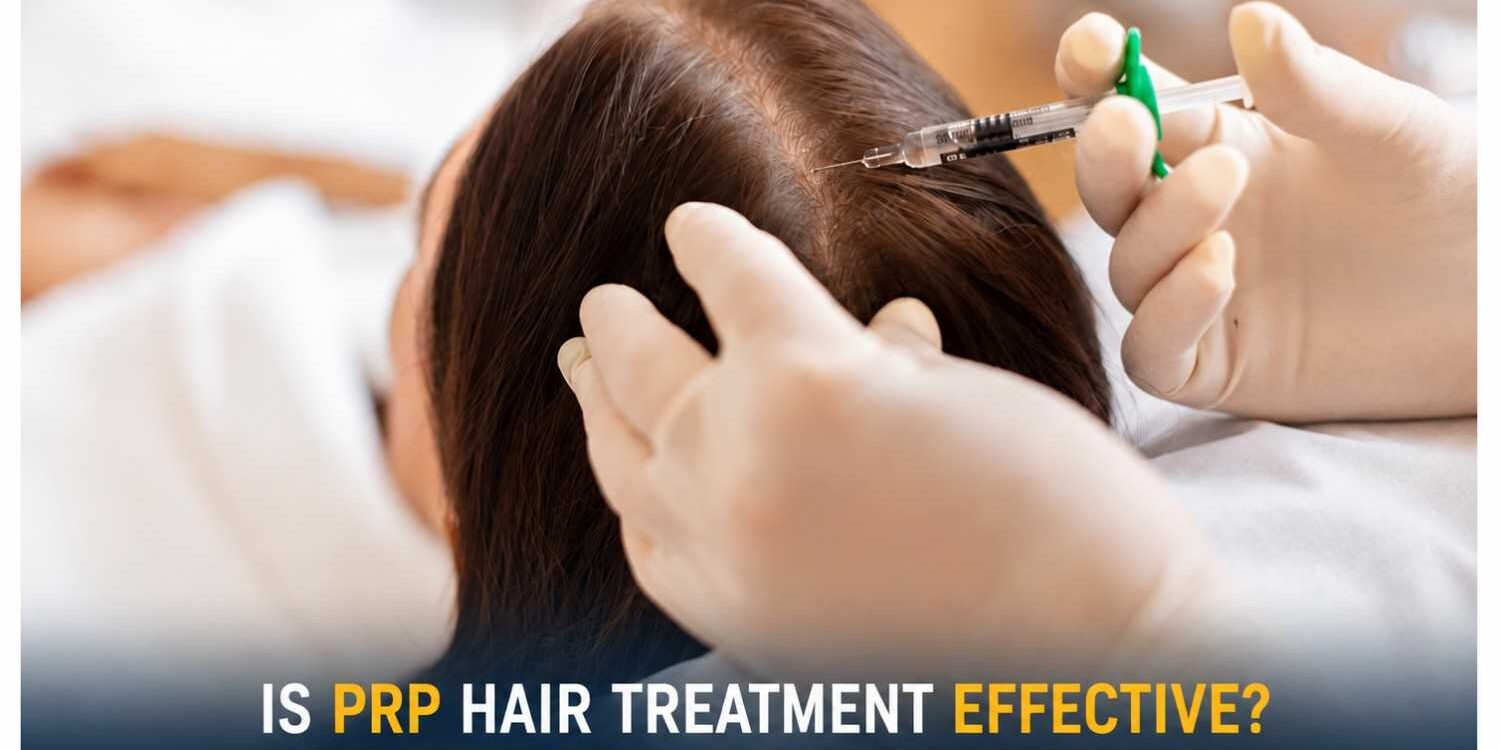
Step 4: PRP Is Injected Into the Scalp
The provider injects the prepared PRP into selected areas of the scalp. These injections target areas where hair is weak or thinning. A medical assessment helps determine whether PRP hair treatment is effective for a person’s hair loss. Patients may also ask is PRP treatment for hair effective when comparing available options.
PRP does not create completely new hair follicles. Its goal is to support follicles that are still present. Other options, such as Maxim hair vitamin, may also be discussed as part of a broader hair care plan when appropriate.
Is PRP Hair Treatment Effective According to Research?
Research suggests that Platelet-Rich-Plasma (PRP) may help some people with pattern hair loss. Studies show the clearest evidence for improving hair density. However, results are not the same for every patient.
What Does the Research Show?
A 2024 review studied 14 trials involving 431 patients with pattern hair loss. The researchers found that PRP was linked with increased hair density. However, they also noted that the studies varied greatly and the overall evidence quality was low.
Other reviews have also found promising results. Research suggests PRP may help with:
- Density: PRP may increase the number of hairs within a treated area.
- Thickness: Some research reports thicker hair after treatment, although results are less consistent than those for density.
- Hair shedding: A large 2025 review found that PRP treatment reduced hair loss across the studies it analyzed.
- Follicle support: PRP may help support existing follicles and their normal growth activity.
- Hair growth: Research shows possible improvements in hair count and growth, but the level of improvement varies.
These findings help explain how effective is PRP hair treatment for certain types of hair loss.
Why Can PRP Results Differ?
There is no single PRP method used across all research. Studies can use different platelet levels, injection methods, treatment intervals, and numbers of sessions. Researchers also study different patient groups. Because of these differences, asking is PRP treatment effective for hair growth does not have one answer for everyone. Research suggests PRP hair treatment is effective at improving hair density in some people with pattern hair loss. However, this does not guarantee individual results.
Patients asking is PRP treatment for hair effective should consider their type and stage of hair loss. A proper assessment can help determine whether PRP is a suitable treatment option.
Who May Get Better Results From PRP Hair Treatment?
PRP may work better when a person still has active hair follicles. These follicles can become weak and produce thinner hair, but they can still grow.
This is important when asking is PRP hair treatment effective. PRP aims to support existing follicles. It does not create brand-new follicles in areas where they are no longer active.
Who May Be a Good Candidate for PRP?
A hair and scalp assessment can help show whether PRP may be suitable. People who may respond better can include those with:
- Early hair thinning: PRP may help when thinning has started but many follicles remain active.
- Mild to moderate pattern hair loss: People at earlier stages may have more follicles that can respond to treatment.
- Androgenetic alopecia: This common form of pattern hair loss can affect both men and women.
- Increased hair shedding: PRP may be considered when shedding occurs but viable follicles remain.
- Thinning areas: Areas with weak or fine hair may offer more treatment potential than long-standing bald areas.
People often ask is PRP treatment effective for hair growth during the early stages of thinning. Results can vary, so being a possible candidate does not mean PRP will work for everyone. An early assessment can identify the cause and stage of hair loss. It can also help determine how effective is PRP hair treatment for a person’s needs.
When May PRP Be Less Effective?
PRP has clear limits. It depends on existing follicles, so it may offer less benefit when hair loss has become advanced.
PRP may be less suitable for people with:
- Advanced or long-term baldness
- Areas where follicles are no longer active
- Scarred or badly damaged follicles
- Hair loss linked to certain health problems
- Poor nutrition or nutrient shortages
- Hormonal problems that need medical care
- Hair loss that may require another treatment
A doctor should first identify what is causing the hair loss. Treating an underlying health or nutrition problem may be more important in some cases. Research may suggest PRP hair treatment is effective for some forms of hair loss, but it cannot restore every bald area. When patients ask is PRP treatment for hair effective, the condition of their follicles is an important factor.
Hair care products, such as Maxim shampoo and conditioner, may form part of a wider hair care routine when appropriate. However, proper diagnosis should come before choosing PRP or another hair restoration treatment.
How Long Does PRP Take to Show Hair Results?
PRP hair treatment does not produce instant changes. Hair grows in stages, so the scalp and follicles need time to respond after treatment.
Some patients may first notice less hair shedding. Changes in hair thickness or density may become easier to see later. Results can vary based on the cause and stage of hair loss. When asking is PRP hair treatment effective, it is important to judge results over several months rather than after one session.
Why Do PRP Results Take Time?
Each hair goes through a natural growth cycle. Some hairs grow while others rest or shed. This cycle means visible changes cannot happen at once. Research has reported improvements after several months of PRP treatment. However, studies use different methods and treatment schedules. This makes it difficult to give one exact timeline that applies to every patient.
Several factors may affect how soon changes appear:
- Stage of hair loss: Earlier thinning may have more active follicles.
- Cause of hair loss: Different forms of hair loss can respond in different ways.
- Follicle health: Weak but active follicles may have more potential to respond.
- Treatment plan: The number and timing of sessions can differ.
- Individual response: Each person’s hair growth cycle and response can vary.
For this reason, claims that PRP hair treatment is effective should be assessed over a suitable treatment period. Results should not be judged immediately after the first injections.
How Many PRP Sessions Are Usually Needed?
PRP is usually given as a series of treatments rather than one session. There is no single schedule that works for every patient. A 2022 review found that PRP studies used different treatment schedules. Some involved several injections given over a period of months. This variation shows why treatment should be based on the individual patient.
A PRP schedule may depend on:
- The patient’s hair loss needs
- The type and pattern of thinning
- Condition of existing follicles
- The treatment method used
- The patient’s response to earlier sessions
- Provider’s clinical assessment
People asking how effective is PRP hair treatment should consider the full treatment plan. The number of sessions alone does not determine the final result. Follow-up visits also give the provider a chance to assess changes. Photos and hair measurements may help track progress over time.
How Long Can PRP Hair Results Last?
PRP is not usually viewed as a permanent, one-time treatment. Hair loss can continue, especially when it has a genetic cause. Some patients may need maintenance sessions after their first treatment series. The timing can depend on their response and how their hair loss changes.
People may ask is PRP treatment effective for hair growth over the long term. The answer depends on factors such as follicle health, ongoing hair loss, maintenance, and other treatments. Regular assessments can help determine whether more PRP sessions are suitable. They can also show whether another hair restoration option should be considered.
Patients asking is PRP treatment for hair effective should therefore consider both short-term changes and long-term care. PRP may support existing follicles, but it cannot stop every cause of future hair loss. For people with more advanced hair loss, a doctor may also discuss transplantation. Factors such as donor hair, treatment needs, and hair transplant cost can then become part of the wider treatment discussion.
What Are the Possible Side Effects of PRP for Hair?
PRP uses a concentrated part of the patient’s own blood. This lowers some risks linked with using material from another person. However, PRP still involves injections, so side effects can occur.
Most reported side effects are mild and happen around the injection area. They may include:
- Injection-site pain: The needle may cause mild pain during or shortly after treatment.
- Tenderness: Parts of the scalp may feel sore or sensitive for a short time.
- Redness: Small red areas may appear where the provider placed the injections.
- Swelling: Mild swelling can develop around treated parts of the scalp.
- Itching: Some patients may notice temporary itching as the scalp settles.
- Headache: A headache may occur after treatment in some people.
- Temporary discomfort: The scalp may feel tight or uncomfortable for a short period.
PRP should not be described as completely risk-free. Injection procedures can also carry risks such as bleeding, bruising, or infection.
Before treatment, patients should discuss their health with a qualified provider. They should share their medical history, current medicines, supplements, and past reactions to injections. This assessment also helps answer how effective is PRP hair treatment for the person’s specific type of hair loss.
PRP Hair Treatment vs Hair Transplant
PRP and hair transplantation both address hair loss, but they work in very different ways. One treatment does not simply replace the other.
PRP hair treatment uses platelet-rich plasma taken from the patient’s blood. A provider injects the prepared PRP into thinning areas. The goal is to support hair follicles that are still present. A hair transplant moves suitable follicles from a donor area to areas affected by hair loss. These follicles usually come from parts of the scalp with stronger hair growth.
The main differences include:
- Existing follicles: PRP depends on follicles that remain in the thinning area.
- Donor hair: A transplant requires enough suitable donor hair.
- Procedure: PRP uses injections, while transplantation involves moving individual hair follicles.
- Hair loss stage: The amount and pattern of hair loss can affect which approach may be suitable.
- Goals: Some patients want to support thinning hair, while others want to restore hair in areas with greater loss.
When asking is PRP treatment for hair effective, follicle health is an important factor. PRP cannot create new follicles where viable follicles no longer remain. Likewise, saying PRP hair treatment is effective does not mean it will work for every patient. A clinical assessment can help compare PRP and transplantation based on hair loss, donor hair, and treatment goals.
Can PRP Be Combined With Other Hair Loss Treatments?
Hair loss can have many causes. For this reason, a treatment plan may include more than one approach.
Depending on the diagnosis, a provider may consider PRP alongside:
- Hair transplant procedures
- Appropriate medical hair loss treatments
- Scalp and hair care
- Regular progress checks
- Long-term hair loss monitoring
People asking is PRP treatment effective for hair growth should first understand what is causing their hair loss. Combining treatments without a proper diagnosis may not address the main problem. Scalp conditions may also require separate care. For example, understanding dandruff vs psoriasis can matter when persistent flakes, redness, or irritation affect the scalp.
A qualified provider can assess the stage and cause of hair loss before suggesting a treatment plan. PRP, transplantation, medical care, and scalp care each have different roles. The best approach depends on the patient’s individual needs rather than using the same treatment plan for everyone.
How Can You Tell If PRP Is Right for Your Hair Loss?
PRP may help some people with thinning hair, but it is not the right choice for every type of hair loss. A proper assessment should come before treatment. People asking is PRP hair treatment effective should consider the cause and stage of their hair loss. The condition of the hair follicles also matters.
What Should You Check Before Choosing PRP?
Use this simple checklist before deciding whether PRP may suit your needs:
- Type of hair loss: Find out what is causing your thinning or shedding. PRP may be used for certain forms of hair loss.
- Duration of hair loss: Long-term bald areas may respond differently from areas that have recently started thinning.
- Pattern of thinning: Look at where hair loss occurs and whether hair still grows in those areas.
- Follicle condition: PRP works with existing follicles. It cannot simply create new follicles where viable ones no longer remain.
- Medical history: Health conditions may affect your hair and the type of treatment you need.
- Medications: Tell your provider about medicines, vitamins, and supplements before starting PRP.
- Expectations: Understand what PRP can and cannot do before making a decision.
- Previous treatments: Share details about other hair loss treatments you have tried.
- Long-term goals: Think about whether you want to support thinning hair or address more advanced hair loss.
These factors can help answer how effective is PRP hair treatment for your situation. A professional assessment can identify possible causes and help set realistic expectations. PRP should not be chosen only because it is popular. The right treatment should match the cause, pattern, and stage of hair loss. The same applies when choosing supportive products, such as a shampoo for hair growth.
Why Consider Maxim Hair Restoration – Philippines for PRP?
At Maxim Hair Restoration – Philippines, we offer both surgical and non-surgical hair restoration options. Our non-surgical services include Platelet-Rich Plasma therapy. We also offer FUE, FUT, and other hair restoration procedures. Our PRP service uses the patient’s own blood. We process the blood to isolate the platelet-rich portion before placing it into selected areas of the scalp. Our official PRP information also explains that treatment plans can vary based on individual needs.
This individual approach matters when someone asks is PRP treatment effective for hair growth. We assess whether PRP may suit the person’s hair loss instead of assuming one treatment fits everyone. The same principle applies when deciding whether PRP hair treatment is effective for a specific patient. Hair loss type, follicle condition, and treatment goals can affect the options we discuss.
For some patients, PRP may be used on its own. Our clinic also offers hybrid approaches that can combine surgical and non-surgical hair restoration procedures when appropriate. Patients wondering is PRP treatment for hair effective can start with a consultation. Our team can review the hair loss and discuss realistic treatment options based on the assessment. Maxim Hair Restoration – Philippines has locations serving Manila and Cebu. To learn more about PRP or other hair restoration options, contact us to arrange a consultation.
FAQs
Does PRP really work for hair loss?
PRP may help improve hair density and thickness for some people with active hair follicles. Results vary based on the cause and stage of hair loss.
How effective is PRP hair treatment?
Research suggests PRP may support existing follicles and improve hair density in some patients. However, results vary, and no treatment can guarantee hair growth.
Is PRP treatment effective for hair growth?
PRP may support hair growth when follicles are still active. It may be less effective in long-standing bald areas where viable follicles no longer remain.
How long does it take to see results from PRP?
PRP results develop gradually because hair follows a natural growth cycle. Some people may notice less shedding first, while visible changes can take several months.
Do I need more than one PRP session?
PRP is often performed as a series of sessions. Some patients may also need maintenance treatments. The right schedule depends on hair loss, response, and professional assessment.